
Copper Clad Steel Conductors
Copper-Clad Steel Narrow Foil
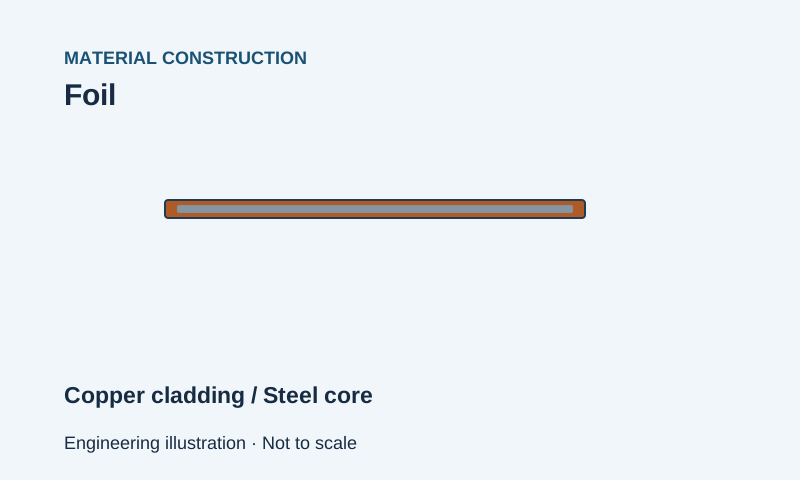
CCS narrow foil combines a steel core with copper cladding in a thin slit form. Specify the strength, electrical and surface requirements for the finished part, together with thickness, slit width and edge condition.
Construction and specification
- Material construction
- Steel core with copper cladding; specify core grade and conductivity grade
- Product form
- Narrow foil
- Strength target
- Specified by tensile strength, steel core and application load
- Use environment
- Grounding, cable, rail, connector or high-vibration signal use
Selection and processing
Specify the narrow slit width, total gauge, copper layers and allowed burr for the formed part. A grounding-wire construction is not a specification for rolled foil. For shielding, include frequency, continuity and the connection to the enclosure.
Standards context
Use the drawing and a material/form-specific purchase specification. Round-wire references do not qualify rolled strip, foil or flat wire. Confirm edition, methods and acceptance criteria.
Standards scope referencesProduct questions
What should I send for Copper-Clad Steel Narrow Foil supply information?
Width, thickness and tolerances. Edge condition, burr, surface and roll dimensions. Core and outer-layer metals, each layer or ratio, and mass or volume basis. Surface finish or coating, joining method and inspection requirements. Quantity, spool or coil format, packaging and delivery destination. This identifies the construction and sample or production request to discuss.
What applications are relevant for CCS Narrow Foil?
CCS Narrow Foil is relevant for Electronic component leads, Connector terminals, Shaped high-strength conductors and related engineered conductor applications where the material tradeoff is validated.
What information should be included in an RFQ for CCS Narrow Foil?
Include product form, dimensions, material ratio or layer requirement, target conductivity or strength, application environment, annual demand, packaging and any test or certification requirement.
Prepare your inquiry
- Width, thickness and tolerances
- Edge condition, burr, surface and roll dimensions
- Core and outer-layer metals, each layer or ratio, and mass or volume basis
- Surface finish or coating, joining method and inspection requirements
- Quantity, spool or coil format, packaging and delivery destination