
Copper-Aluminum Composite PV Ribbon & Busbar Ribbon
Copper-Aluminum Composite Interconnect Ribbon
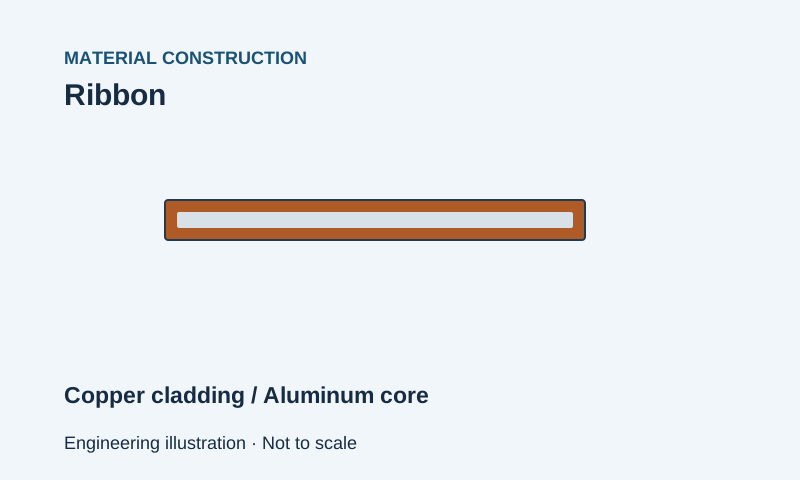
Composite interconnect ribbon joins solar cells into strings using a copper-aluminum conductor with a solderable surface. Ribbon geometry, coating and mechanical properties need to work with the cell layout and stringer. Send the cell drawing, process window and spool requirements to discuss samples.
Construction and specification
- Material construction
- Copper-aluminum composite or specified copper base with the coating defined by the cell process
- Product form
- Interconnect ribbon
- Width range
- Common PV ribbon widths; custom dimensions by drawing
- Thickness range
- PV module interconnection thickness range; custom by module design
- Surface
- Tin or solder coating options by soldering process
- Packaging
- Spool, traverse wound spool or customer-specified package
Selection and processing
Interconnect ribbon joins cells. Pad layout, stringing conditions, mechanical condition, camber and spool handling determine the trial specification. Record joint strength and resistance before module-level reliability checks.
Standards context
Use the drawing and a material/form-specific purchase specification. Round-wire references do not qualify rolled strip, foil or flat wire. Confirm edition, methods and acceptance criteria.
Standards scope referencesProduct questions
What applications are relevant for Copper-Aluminum Composite Interconnect Ribbon?
Copper-Aluminum Composite Interconnect Ribbon is relevant for Solar cell stringing, Cell-to-cell interconnection, PV ribbon substitution evaluation and related engineered conductor applications where the material tradeoff is validated.
What information should be included in an RFQ for Copper-Aluminum Composite Interconnect Ribbon?
Include product form, dimensions, material ratio or layer requirement, target conductivity or strength, application environment, annual demand, packaging and any test or certification requirement.
Prepare your inquiry
- Width, thickness and tolerances
- Edge condition, burr, surface and roll dimensions
- Core and outer-layer metals, each layer or ratio, and mass or volume basis
- Coating alloy and thickness, soldering conditions, cell layout and spool format
- Quantity, spool or coil format, packaging and delivery destination