
Nickel Clad Copper Conductors
Nickel-Clad Copper Round Wire
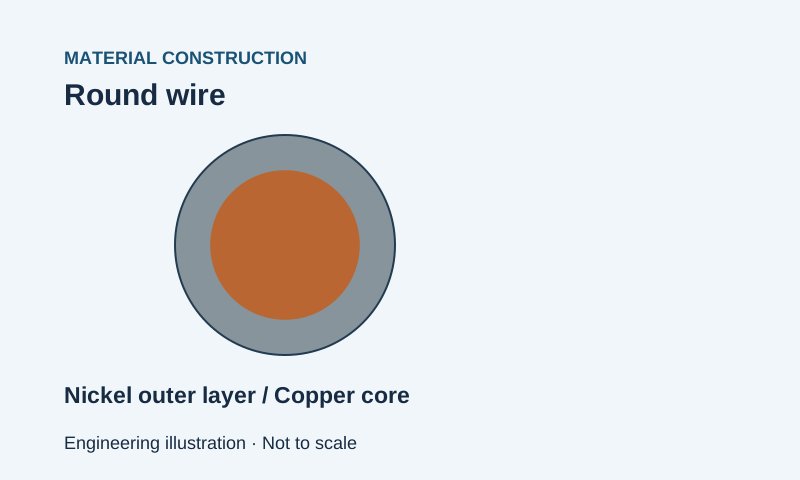
NCC round wire has a copper core with nickel cladding. Select the construction around the required resistance, joining method and service environment. For elevated-temperature use, include the temperature profile, exposure time and insulation system in the specification.
Construction and specification
- Material construction
- Copper core with a nickel outer layer; specify layer construction and ratio basis
- Product form
- Round wire
- Nickel layer
- Custom layer ratio by corrosion, welding and temperature requirement
- Application environment
- Battery, high temperature, corrosive, hydrogen or sensor applications
Selection and processing
There is no construction-independent operating-temperature rating. The conductor, surface, insulation, joint and exposure time set different limits. Define the thermal profile and required electrical/mechanical checks for the finished lead or connection.
Standards context
ASTM B355-11(2024): nickel-coated soft/annealed round copper wire. Confirm construction, nickel mass class and required tests; the clad name alone does not establish compliance or exclusion. This reference is not certification.
Standards scope referencesProduct questions
What applications are relevant for NCC Round Wire?
NCC Round Wire is relevant for High-temperature sensors, Lighting lead-in wire, Chemical process conductors, Engine compartment wiring and related engineered conductor applications where the material tradeoff is validated.
What information should be included in an RFQ for NCC Round Wire?
Include product form, dimensions, material ratio or layer requirement, target conductivity or strength, application environment, annual demand, packaging and any test or certification requirement.
Prepare your inquiry
- Bare conductor diameter, tolerance and finished diameter if coated or insulated
- Temper, required resistance and termination
- Core and outer-layer metals, each layer or ratio, and mass or volume basis
- Surface finish or coating, joining method and inspection requirements
- Quantity, spool or coil format, packaging and delivery destination