
Nickel Clad Copper Conductors
Nickel-Clad Copper Strip
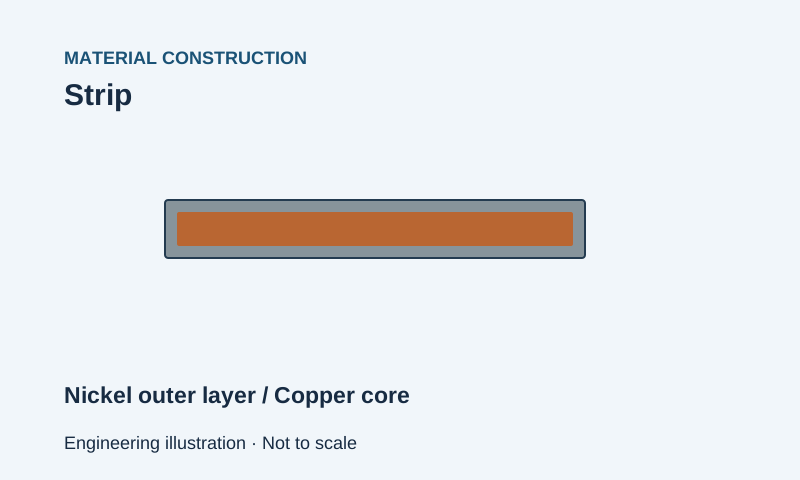
NCC strip combines a copper core with nickel cladding for conductive parts that need a nickel joining or contact surface. For battery and other electrical connections, specify strip dimensions, layer construction and the mating materials, then define the welding and operating requirements.
Construction and specification
- Material construction
- Copper core with a nickel outer layer; specify layer construction and ratio basis
- Product form
- Strip
- Nickel layer
- Custom layer ratio by corrosion, welding and temperature requirement
- Application environment
- Battery, high temperature, corrosive, hydrogen or sensor applications
Selection and processing
Compare the nickel surface requirement separately from the copper conductive section. Include mating metals, weld design, exposed edges and service medium. Nickel-clad and nickel-plated copper need their actual layer construction and process specified; the names alone do not establish interchangeability.
Standards context
Use the drawing and a material/form-specific purchase specification. Round-wire references do not qualify rolled strip, foil or flat wire. Confirm edition, methods and acceptance criteria.
Standards scope referencesProduct questions
What should I send for Nickel-Clad Copper Strip supply information?
Width, thickness and tolerances. Edge condition, burr, surface and roll dimensions. Core and outer-layer metals, each layer or ratio, and mass or volume basis. Surface finish or coating, joining method and inspection requirements. Quantity, spool or coil format, packaging and delivery destination. This identifies the construction and sample or production request to discuss.
What applications are relevant for NCC Strip?
NCC Strip is relevant for Lithium battery tabs, Energy storage connections, Chemical process connections, Hydrogen-related evaluation and related engineered conductor applications where the material tradeoff is validated.
What information should be included in an RFQ for NCC Strip?
Include product form, dimensions, material ratio or layer requirement, target conductivity or strength, application environment, annual demand, packaging and any test or certification requirement.
Prepare your inquiry
- Width, thickness and tolerances
- Edge condition, burr, surface and roll dimensions
- Core and outer-layer metals, each layer or ratio, and mass or volume basis
- Surface finish or coating, joining method and inspection requirements
- Quantity, spool or coil format, packaging and delivery destination